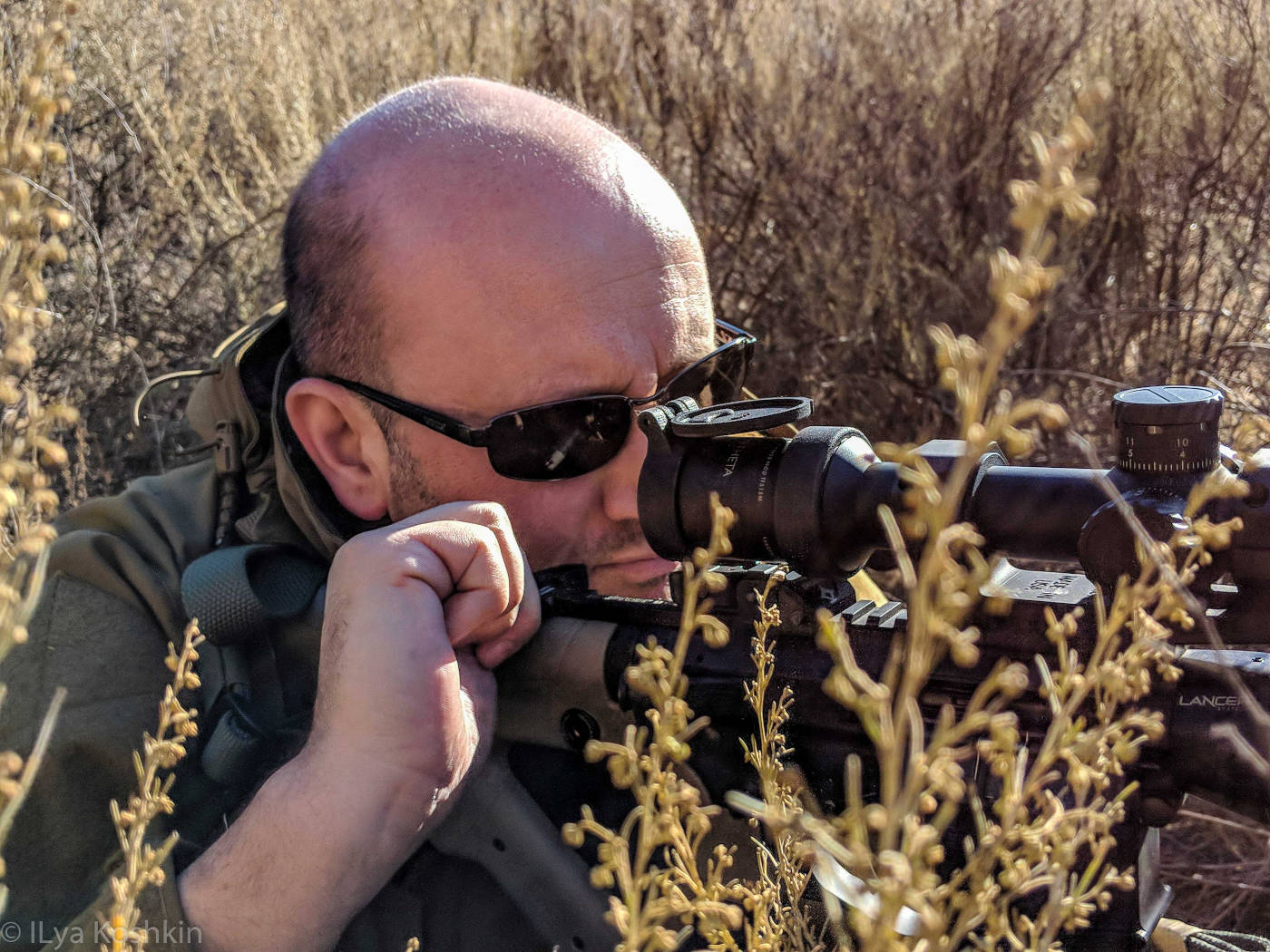
Today we’re talking to ILya Koshkin, a prolific blogger and internet personality in the world of rifle optics. I’ve personally been following him for years and learning from his advice. We’ve recently struck up a bit of a friendship and I thought it was a great opportunity to bring him on to the show and have him share some of his wisdom.
I don’t know about you, but choosing optics for rifles is one of those things that kind of excites me but also causes a lot of dread. There are a lot of options out there from a variety of manufacturers, and they’ve all got a lot of slick marketing materials designed to confuse you even more.
In this episode, ILya breaks down the most important elements to consider when shopping, some common misconceptions, and some of his own pet peeves.
Related Links
- Optics Thoughts (ILya’s Blog)
- ILya’s YouTube Channel
- Instagram / Facebook
- SWFA Optics
- Interview with John Simpson (Episode 2)
- Tangent Theta Optics
Episode Summary
We covered a lot of technical ground during this episode, so it’s actually fairly difficult to narrow it down to the most important takeaways. But there were a few things that I think stood out as key messages to get across.
Scope Tube Diameter
There’s a common perception out there that a larger diameter scope tube means that more light passes through the optic. I know I’ve heard it, and probably thought it, and you’ve likely seen it as well. Right out of the gate, ILya wants to crush that myth.
Tube diameter has no effect on how bright the optic appears to your eye. What it does do is offer more room for adjustment with windage and elevation. It also increases weight.
The biggest impact on the brightness and fidelity of a scope actually comes from the diameter of the objective lens. Everything else flows after that.
Beware Marketing Hype
ILya pointed out that marketing departments love to talk about specifications like “95% light transmission.” In reality, this means nothing. The most important part is actually how the image appears to the human eye, and those numbers have precious little to do with that.
Manufacturers also love to include a lot of whiz-bang features. ILya cautions, though, that it’s pretty common for a lot of companies to put these features in there while still not having a solid grasp of the basic components. Depending on where the optic is made, there might be variations in the manufacturing components and methods from batch to batch.
If your budget is limited, it’s best to focus on the basics. ILya specifically mentions SWFA as a company who does this well. They don’t have illumination, zero stops, or other “fancy” components on their budget series optics. But their scopes do the basics really well.
Diminishing Returns
It’s not a popular topic to discuss, but it’s still true. There are price points with nearly everything firearms related where the return on investment starts becoming less and less as you spend more. For a lot of people, even these inflection points are still quite expensive, but that doesn’t mean they aren’t there.
For hunting-oriented optics, that point comes around $800.
In competition and tactical optics, it’s around $1500.
For red dot sights, the point of diminishing returns starts around $300.
Low power variables are between $800 and $1500 depending on second focal plane or first focal plane respectively.
Interestingly, prismatic optics are around $1000 but ILya points out this is more because of the market than for technical reasons.
This isn’t to say that a more inexpensive optic in the $400-$500 range will fall apart, but they aren’t going to do certain things as well due to the compromises involved.
Desirable Features
We spent a bit of time discussing the desirable features for different groups of shooters like hunters, competitors, and tactical.
With hunters, it’s primarily a matter of keeping the weight down and enough functional magnification to hit at ethical distances. Since most hunting in the US take place during daylight hours, there isn’t as much need for large objective diameters. Furthermore, there’s no pressure for fancy reticles and turret configurations.
Competition shooters, particularly in PRS, are really focused on the reticle, turret usability, and the ability to maintain a repeatable zero. Weight isn’t nearly as much a factor. With reticles, choosing a tree or regular crosshair is more personal preference than anything, but tree reticles have advantages in some situations.
Tactical shooters, such as law enforcement, have a need for bright optics that work well at night, reasonable magnification, and reliable zero.
Wrapping Up
I really enjoyed this discussion, and there are so many rabbit holes that we could have dove down along the way. Thanks to Ilya for coming by, and I look forward to talking again!


Great podcast. Learned a few things, and gained some perspective. Particularly interesting to me is the table of diminishing returns. Thanks for that. Now, If only I can figure out what if anything I can be the “Dark-lord” of.
Thanks for listening, Eric!