Podcast: Play in new window
I like simple. Despite my tendency for diving into the weeds of things, I very much prefer distilling things down to simple principles for success. There is so much noise, and so many things to keep track of in life, that trying to be on top of all of it at the same time becomes a nightmare. Today, in honor of the 99th podcast episode, I’m sharing a few simple rules I’ve settled on with wide-ranging impacts.
If you recall, I have some core tenants of the Martial Marksman Training Philosophy. Those ideas touch just about everything that we do here in some way, and I like to apply them as we get into the weeds. As a refresher:
- Train for the Target: Know what you’re trying to achieve and stay focused on it
- There is No Such Thing as Optimum: To say that something is “optimized” requires a specific set of known circumstances, this doesn’t exist in real life
- Embrace Simplicity: True mastery is expert execution of the fundamentals
- It’s Training, Not Entertainment: Training is supposed to be hard and boring; either love the results or learn to love the process
- Play the Long Game: It’s more important to make smaller incremental progress safely and consistently than taking risks on huge surges of effort
What I’m about to say are a series of beliefs that nicely compliment, if not expand upon, these philosophical principles.
The First Thing I Now Believe: Simplifying Strength and Health
I have many posts talking about ways to measure your levels of fitness. Recently, I even went so far as to develop a whole spreadsheet calculator to help you set targets along this journey. These things are one of my passions, even if I’m not the best physical specimen myself, and I enjoy nerding out over it. But the more I think about things, the more I see value in providing simple goals and metrics to aim for.
So here is one that I think serves as a fantastic guideline. Ready?
Take your height in centimeters and subtract 100. This is your target weight in kilograms. Give or take about 5% or so as a guideline.
Here’s an example: I’m 6’1″ tall (73 inches). So looking up a quick converter online and 73 inches means 185 centimeters tall. Subtracting 100 leaves 85. If I convert 85 kilograms to pounds, that’s 187.4 lbs as an “ideal” weight. Given a range of +/- 5%, that means anywhere from about 177 to 197 is fine.
Now, here’s the catch. You should aim to achieve this while having an abdominal circumference that’s 45% or less of your height.
For me, 0.45 x 73 = 32.85″
In other words, I should aim to be anywhere within 177 to 197 lbs while also maintaining an abdominal circumference around 33″ or less.
Why This Works
This trick of height in centimeters minus 100 has been around for a while, mostly in European fitness circles- probably because of the use of metric measurement systems. It works because it forces you to balance overall mass against body composition. To be clear, this is a metric that I apply to “all around” performers and not specialists. If your specialty is in a strength sport like powerlifting, or you are in a profession that rewards being heavier and harder to move (like a corrections officer), then do what you need to.
It’s easy to lie to ourselves. I can’t tell you how many times I’ve gotten pushback about my suggestions on “ideal weight” because the perception is that it’s “too small.” The kind of men who pursue strength at any cost will indeed be bigger and heavier, which helps them push more weight, but it also comes with many other negative effects to health in the long run (and remember, Play the Long Game) such as blood pressure, joint wear and tear, and other downstream effects. I think it’s more important to be all-around athletic and fit than it is to be maximally strong in isolation.
Don’t just take my word for it. Let’s take a look at the top athletes in the decathlon. Success here means having to be good at a variety of events from running, to sprinting, jumping, lifting weights, and throwing. This variety of capability what we expect of a Martial Marksman.
- Leo Neugebauer: 6’3″ (191 cm) /190 lbs (86.2 kg)
- Sander Skotheim: 6’1″ (185 cm) / 176 lbs (79.8 kg)
- Johannes Erm: 6’6″ (197 cm) / 194 lbs (88 kg)
- Lindon Victor: 6’3″ (191 cm) / 196 lbs (88.9 kg)
- Harrison Williams: 6’5″ (196 cm) /195 lbs (88.5 kg)
- Simon Ehammer: 6’0″ (182 cm) / 176 lbs (79.8 kg)
- Damian Warner: 6’1″ (185 cm) / 183 lbs (83 kg)
I could go on, but my data tells me that the average height of a competitive decathlete is 6’1.75″ (187 cm) and an average weight of 83 kg (183 lbs). Granted, competitive decathletes also select for certain body types and heights, but I think the principle holds true regardless. You also see it in athletes like Shaun White (snowboarding, 172 cm / 70 kg), Novak Djokovic (tennis, 188 cm / 82 kg), Lionel Messi (soccer, 170 cm / 67 kg), and Magnus Midtbø (rock climbing, 174 cm / 72 kg).
I chose an abdominal circumference at 45% of height because it’s a good measure of leanness. Current guidelines recommend keeping your waist under 50% of your height to minimize health risks. I’m suggesting 45% for a two reasons. First, it gives you a buffer zone to work with if you indulge during certain parts of the year. Second, a 45% waist-to-height ratio generally corresponds to a body composition of roughly 12–18% body fat. If you recall, I generally recommend men aim for 12–15% as a default.
Reference Table
| Height (Imperial) | Height (Metric) | Target Weight Range (lbs) | Target Weight Range (kg) | Max Target Waist (45%) |
|---|---|---|---|---|
| 5’6″ | 168 cm | 142 – 157 lbs | 64.5 – 71.5 kg | 29.5″ |
| 5’7″ | 170 cm | 147 – 162 lbs | 66.5 – 73.5 kg | 30.0″ |
| 5’8″ | 173 cm | 153 – 169 lbs | 69.5 – 76.5 kg | 30.5″ |
| 5’9″ | 175 cm | 157 – 174 lbs | 71.0 – 79.0 kg | 31.0″ |
| 5’10” | 178 cm | 163 – 181 lbs | 74.0 – 82.0 kg | 31.5″ |
| 5’11” | 180 cm | 168 – 185 lbs | 76.0 – 84.0 kg | 32.0″ |
| 6’0″ | 183 cm | 174 – 192 lbs | 79.0 – 87.0 kg | 32.5″ |
| 6’1″ | 185 cm | 177 – 197 lbs | 81.0 – 89.0 kg | 33.0″ |
| 6’2″ | 188 cm | 184 – 204 lbs | 83.5 – 92.5 kg | 33.5″ |
| 6’3″ | 190 cm | 188 – 208 lbs | 85.5 – 94.5 kg | 34.0″ |
| 6’4″ | 193 cm | 195 – 215 lbs | 88.5 – 97.5 kg | 34.5″ |
By pursuing this metric, you naturally work to keep your body fat percentage low while also building your strength and muscle mass. This has cascading health effects including higher testosterone levels, improved sleep, improved mental health, and just all around better quality life.
Saying it is one thing, but getting there is another. Which leads to the next belief: the absolute necessity of doing hard things.
The Next Belief: The Value of Doing Hard Things
There’s a story about British mental hospitals during WWII. As the German bombings of London intensified, the symptoms of many mental patients reportedly began to wane. They became more focused, clearer, and functional. They even began leaving the facilities to become helpful, productive members of society in the face of adversity. The change was temporary, of course, but it illustrates something important about how the human mind responds to real challenge.
When was the last time you went out of your way to do something genuinely difficult? Not just a work project or something that was forced on you, but something you specifically chose to pursue because it was hard?
My friend Justin from Swift Silent Deadly recently turned me on to the book The Comfort Crisis, by Michael Easter. He echoes an idea that I’ve been getting at for years, but puts it in a more elegant way: Our modern lives are far too comfortable, and it’s destroying our mental and physical health.
Human history is filled with hunger, loss, environmental stress, and the constant need to survive. Our bodies and minds seem to function best when we experience short, intense bouts of stress followed by recovery. It’s the same principle as lifting heavy weights: you expose yourself to the stress, struggle against it, and grow stronger so the same load becomes easier the next time.
This applies to all manor of “discomforts” that we could take advantage of.
Without enough of this kind of stress, our psyches start lowering the bar for what counts as an “emergency,” until we’re increasingly treating minor problems as catastrophes.
Choosing Hardship
The most direct way to approach this is to pick a difficult goal and organize your life toward achieving it. It could be signing up for a Spartan Race and training for it, committing to a year of consistent Brazilian Jiu-Jitsu training, or tackling a serious fat loss transformation. Maybe you want to complete a multi-day ruck or hike, or spend a week camping in austere conditions with minimal gear.
Maybe you want to develop a difficult skill, like achieving top scores in pistol or rifle courses of fire.
It all starts with simply choosing to do the harder thing. Sacrifice a bit of comfort in the name of your personal growth and potential. That gets to another problem, and the next rule to keep in mind.
Most “Content” Solves the Wrong Problem
A huge amount of training advice, gear reviews, and “tips” we consume every day is designed to solve a different problem than the one we think we have.
Whether it’s a new optic, a specialized supplement, a fancy training program, a new gun, or whatever widget, the content we see online and in print is optimized for getting us to spend money, not necessarily for being purely helpful. That doesn’t mean that the advice is useless, but it does mean that the incentives rarely align with providing the highest-leverage improvements to actual performance.
Realize that all of these content producers, especially the big ones, are businesses. The fundamental purpose of a business is to make money by selling something or providing a service. Guns and optics are durable goods, which means that once you have a quality one it is unlikely to fail you or even be a limiting factor in your performance. Manufacturers have every incentive in the world to try and convince you that the thing you already have isn’t as good as the newest thing that they produce, or that you really need a second, third, fourth, or tenth version of it. So they rely on content creators to “market” new products and drive demand from both new and existing gun owners.
Fitness content? It’s not much different. Once someone grasps the basics, and selects from a menu of quality benchmark movements to pursue over time, the content producers need something else to sell. Maybe it’s some secret “hack” they learned through their coaching experience, but it’s really just rearranging the same ingredients on the menu.
Most of the time, real progress comes from doing more of the boring, unsexy fundamentals. Dry fire. Consistent range time. Sleep. Protein intake. Deliberate practice. These things don’t require buying anything new, and they don’t generate much content (or engagement), so they rarely make it into your algorithm.
Instead, we’re shown solutions that feel productive, such as new gear, new protocols, and new “systems” because those things can be packaged and sold. The result is that a lot of people end up well-equipped and well-informed, but not necessarily any more capable.
I’ve fallen into this trap myself more times than I can count. It’s easy to feel like you’re making progress when you’re researching the latest piece of gear or trying out new methodologies. The harder (and usually more effective) path is simply doubling down on the basics you already know work.
The Audience Capture Challenge
I mentioned that most of the big content producers are businesses, and they need to make money. Many creators, like me, don’t actually have something direct to sell to you. So we try and get your attention, and then while we have your attention we can put ads and links in front of you to other businesses who do have something to sell. This is the internet market of display ads and affiliate links.
One of the best ways to do that is to give your audience what they want so that they continue coming back to you for more, and you continue to capture attention. Like it or not, people in the shooting world love to read and talk about equipment. Across the board, the articles in niches like mine that draw the most eyeballs are those about guns and gear. So there is a ton of incentive to keep producing it.
Manufacturers know this, too. So they drip out new releases over the year to keep people engaged. They work with content producers to publish timely reviews, but on somewhat short deadlines (so you rarely see multi-thousand round burn downs of new products). Not playing along or providing negative feedback on the part of the publisher results in damaged relationships and no products to review in the future, which means fewer eyeballs and suffering business.
I can tell you from experience that, for the most part, publishers would rather just not publish a pointed or negative review of something to avoid hurting the business relationship. That’s how gun magazines got such bad reputations for, “Every new thing is amazing!” You never saw the things that didn’t work out.
At the same time, I’ve tested enough gear and firearms over the years to form some fairly strong opinions on what actually matters. Which gets us to the next rule.
Most Things are Kind of the Same: So Buy What You Like
Once you reach a certain level of quality, most gear in any category performs similarly enough that the differences are smaller than we like to admit.
A good reliable defensive pistol or rifle from any major manufacturer will do the job well. The same is true for optics, boots, nylon gear, and everything else. The gap between “good” and “great” is marginal and nearly unnoticeable for most people. At some point on the spectrum, you are spending more money for the prestige of the thing and signaling something about yourself rather than buying actual performance.
What does matter is how the gear interacts with you. Not just the important elements like ergonomics, balance, the feel of the trigger, but how it interacts with you emotionally. In other words, you should also account for things that you just enjoy, feel good using, and are passionate about.
So much of the advice we see out there overly focuses on being “practical” or fixates on optimization for low-probability events. I fell into this mindset myself for a long time. Everything was about the “best” tool for the job when it came to defense of self, home, and community during an emergency (AKA trying to be “optimal”). When out and about carrying a concealed handgun, it was finding the “optimum” balance of size, weight, capacity, etc. But the gun was also boring, and I didn’t want to practice with it as much as the other guns in my safe that actually brought me joy to shoot.
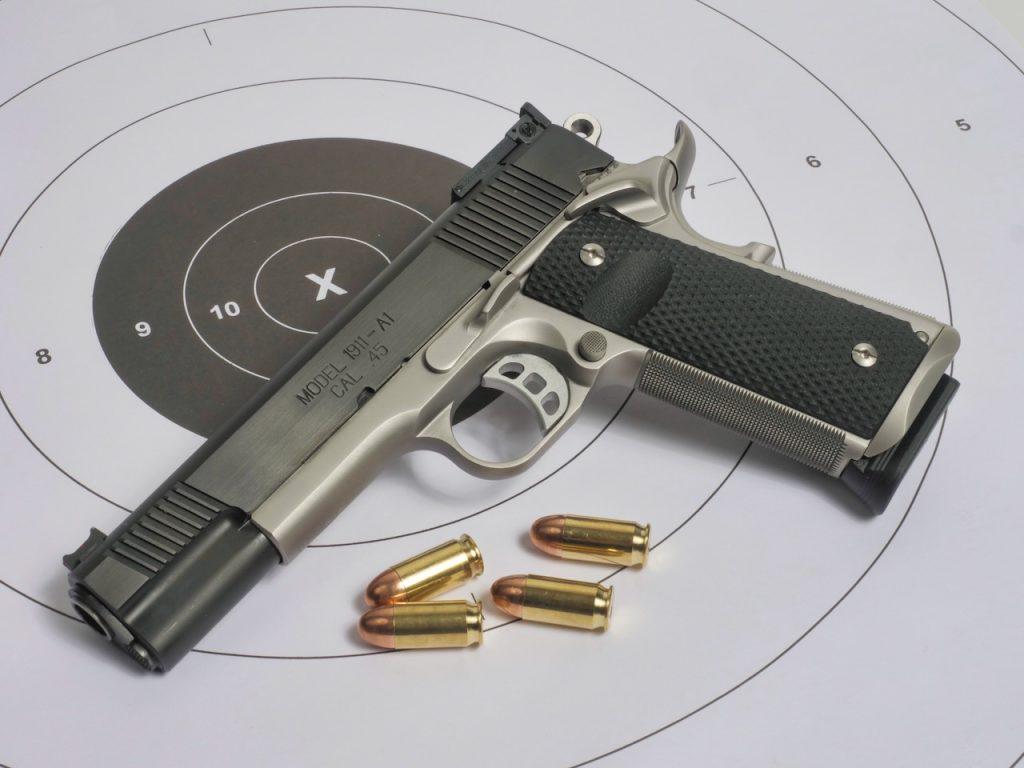
Over time, I realized that the guns I enjoyed shooting were the ones that I actually trained with. The “optimum” choice sat in the safe more often than not. This is why, despite them being heavier or with lower capacity, I’ve slowly shifted to a preference in metal framed guns and even revolvers. It’s what led me to investing unreasonable amounts of money to personalize my favorite guns with the services of a gunsmith, to foster even greater emotional connection.
The guns I connect with the most are the ones that I practice with and carry the most, which makes them the more effective choice for me in the long run. Not because they are technically superior, but because they keep me engaged with the skill of shooting.
The Tactical Timmies and Sheepdog Shanes of the world will obviously tell me that my personal choice of a single stack metal framed gun, or a six shot revolver, are poor choices sure to get me killed in the streets. While obviously limiting myself to such “unoptimized” choices in the modern world is a personal choice, I feel less pressure to optimize for an event that will (in all probability) never happen.
This principle applies beyond guns. Consider the other gear you actually want to wear and use. Or maybe, in the gym, the kinds of movements and exercises that you simply enjoy doing. Is a steady diet of double kettlebell front squats and clean & press the most “optimum” for gaining strength and conditioning? No. But if you connect with it and it keeps you showing up, then it’s worth it.
This connection is what makes things sustainable. Which gets to the next and final rule.
Consistency Trumps Everything
At the end of the day, all of these ideas from the simple health metrics, to the willingness to do hard things, and the choice of enjoyment over optimization only matter if you actually stick with them.
Way back in one of my earliest podcast interviews with Russell Miller, he said “Accuracy is a product of consistency.”
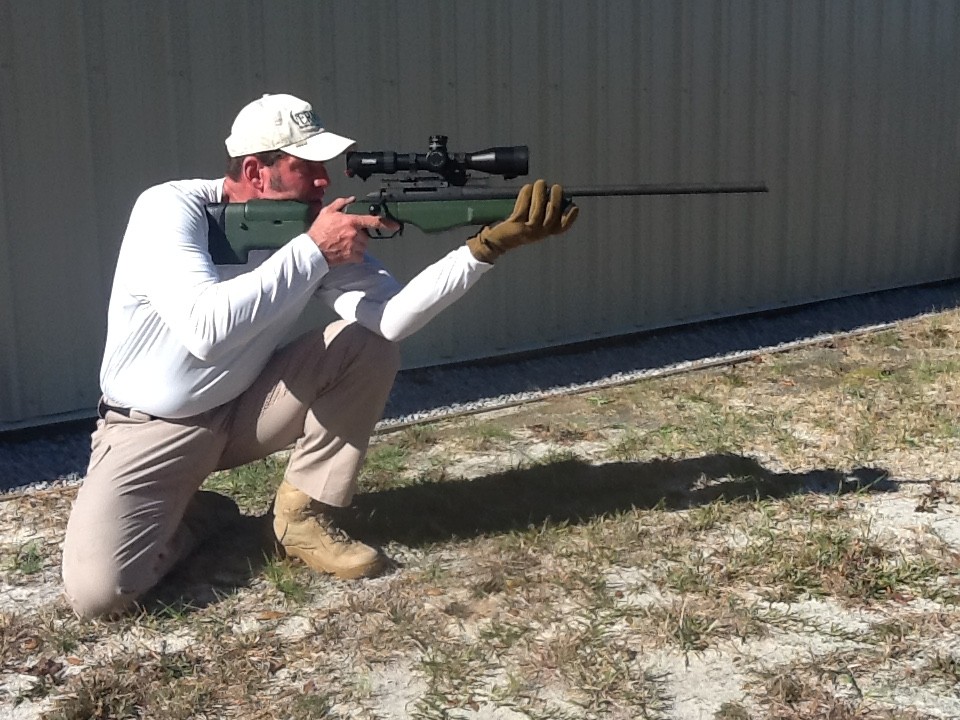
When he said it, the context was about consistency of action and behavior. He meant setting up and executing your shot process the same way every time. But, over the years since that conversation, I’ve realized that the idea applies to nearly everything. Whether it’s manufacturers holding to consistent tolerances or a consistent technique for performing a lift in the gym, performance is a product of repeatability and consistency.
Consistency is the real multiplier in life. The more frequently you do something, the bigger an impact it has on the rest of your life, for both good and bad. The mediocre training plan that you actually show up and execute every few days is better than the “optimal” one that feels like a chore and you constantly find reasons not to do.
Consistent execution of the fundamentals is what drives real progress. The more time you spend researching the next best thing, the less time you spend actually training the basics. The more you optimize on paper, the less likely you are to build habits that move the needle.
Most of the noise in this industry exists to distract you from this simple truth.
So, choose your standards and techniques. Make them simple enough to remember and challenging enough to matter. Then simply show up consistently, even when it’s boring, even when it’s hard, and even when nobody else is watching.
Accuracy is a product of consistency.
Russell Miller, Episode 9
Final Thoughts
If there is one overarching message in all of this, it’s that simplicity and consistency beat complexity and consumption almost every time.
Health and fitness metrics don’t need to be complicated. The training doesn’t need to be optimized to the nth degree (there is no optimum). The gear doesn’t need to be the newest or most advanced. What matters is showing up again and again with standards that are clear enough to follow and meaningful enough to matter.
Most of the noise exists to pull us away from this simple truth. It sells us on the idea that we’re missing something, that the next purchase or the next program will finally be the thing that moves us forward. In reality, the the latest “thing” is rarely the problem. The actual problem is usually whether we’re proficient at the fundamentals and willing to keep doing them day in and day out.
So choose your standards. Keep them simple. Do the hard things when it counts. Choose the gear and training that actually keeps you engaged, and then show up for it consistently.
That’s where the real results live.