Today I’m waxing poetic on one of the most underutilized tools for making progress as a shooter: the shot timer. I don’t think anyone would ever balk at the idea that improving your raw marksmanship ability is important, and we all like to see our scores go up over time. But if you look at our standard courses of fire, every one of them includes time components. It’s not just about how accurate you are, but whether you can do it within a certain amount of time.
So what does the shot timer actually measure, and how does that impact our ability to improve performance? I’m glad you asked.
What a Shot Timer Does
I’ll spare you the pithy answer about shot timers measuring time. Duh. Well…never mind, I did it anyway.
Shot timers are about providing a specific objective metric. Making progress in any skill requires you to use a series of repeatable benchmarks to compare yourself against. Let’s use the barbell squat as a different, but related, example.
When you’re strength training, what is your objective metric to know you’ve made progress? The obvious answer is weight on the bar. Most people, most of the time, look at the weight on the bar as the absolute qualifier that they are making progress. However, any experienced coach will point out that the weight on the bar is only about half of the challenge. The other half is technique.
You see, many people overly focus on the one metric and therefore sacrifice the others. With the squat, the common trend is someone adds five pounds to the bar week to week, thinking they’re getting stronger, but they also shorten their range of motion every session. They start out going down to proper depth with their hips slightly below their knees at the bottom of the squat. Then after several weeks of adding five pounds to the bar, they’re only going about 2/3 as deep. The shorter range of motion is easier, and therefore lets them compensate for the increased load on the bar.
So, in reality, they didn’t make much strength progress at all because they didn’t maintain a standard technique throughout their training.
So What’s That Have to Do With a Shot Timer
The timer is your no-BS objective measure of time. You can use it several ways, which we’ll get to, but understand that it’s there to keep you honest. If you’re able to improve your 10-shot score on basic rifle marksmanship over several sessions, but you’re also taking way longer to do it- then perhaps you haven’t improved as much as you thought.

Two Types of Shot Timers
There are really two ways to use a shot timer. Most timers can do both, but many of the free apps and things out there can only do one. The first way, and often my favorite, is a par timer. This means that you set a specific time limit for accomplishing a given task, and then work to improve your performance within the constraints of the time given. This is like the squat analogy, where the time limit is the depth and your score within that time limit is the weight on the bar.
The second method is actual shot timing. That could mean time to first shot, split times, or how much time it took you to accomplish a given task. This is a bit more like using the timer as the weight on the bar, where your objective is improving the time itself while not sacrificing technique. In several types of shooting, including our defensive rifle course of fire, your score is actually an equation balancing points earned against how long it took to achieve it.
Both types of training have value. You have to use the appropriate type of timing to suit the goal you’re pursuing.
How to Train with Par Times
Par times are constraints on performance. They are the way to ensure you’re getting quality repetitions and staying within bounds of performance standards.
In competitions settings, like bullseye, the par time is fixed amount of time allowed for a particular stage. Your goal is to maximize your performance within that time limit. For example, the rapid fire stage of a bullseye match involves five shots within ten seconds. Be as accurate as you can within those ten seconds. There are no bonus points for going faster, so it’s to your advantage to use up your time and take roughly two seconds per shot and make them count. This provides a consistent training constraint that everyone can work for- much like strict technique requirements for a squat within a powerlifting meet.
As a training tool, I love par time ladders. Pick a particular skill, such as drawing and placing a hit into the a-zone of a USPSA target. Set a timer with something generous like 2.5 seconds. Put the timer on random start and begin. Perform five dry fire repetitions. Your goal is not beating the timer, but rather to execute perfect technique of drawing and firing at the a-zone. Try to break the shot right on the time limit, if not slightly ahead. Do not rush the shot to do it in sub 1 second while working with the 2.5 second limit.
Make the reps deliberate.
Once you perform five perfect repetitions, decrease the par time by one or two tenths of a second. Repeat this process during a practice session until you’ve reached a limit on perfect technique within the time allowed. That could happen at 1.8 seconds, 1.2 seconds, or 0.8 seconds. That part doesn’t matter. The goal is perfect technique executed within the par time. Once you cannot maintain perfect technique, then the practice session is over. Write down what your limit was and then track it and see if it improves next time. As with strength training, I cannot emphasize enough that you need a logbook to track progress.
You can, and should, apply par time ladders to nearly any shooting skill during dry fire.
How to Train Shot Timing
Purpose-built shot timers detect impulses from the weapon and mark it on the clock. More often then not, this style of timing appears when doing evaluations of shooting skills. In general, we pay attention to three values:
- Time to first shot
- Split times from shot to shot
- Total time for the string/stage
The time to the first shot is exactly what it sounds like. Let’s use our practice session of drawing and firing a shot into the a-zone of a USPSA target. Our par time method set a time limit for us to accomplish the task to a prescribed standard. The shot timer method is effectively the inverse: how quickly can we accomplish a task while retaining “good enough” performance. For example, a bullseye stage or action pistol stage are about accruing as many points a possible within a set time. But something with a shot timer might be “how quickly can you land five hits in an eight-inch circle?”
The time to first shot represents how long it took you to go from the ready position to the first shot. The total time is the time until that fifth shot, and and the split times tell you how quickly you were able to get back on target from shot to shot.
Par time training is very good for getting you to that time to first shot, and the ladder method described above is great for getting you there. The shot-to-shot reacquisition of acceptable sight picture is another skill to itself. The timer is your diagnostic.
Using Timer Data
Think of this scenario: you want to do a Bill Drill and place six hits in the a-zone of a USPSA target as quickly as possible from seven yards. On start, your time to first shot from the draw was 1.2 seconds. From there, your split times for shots 2, 3, 4, and 5 were 0.3, 0.6, 0.5, 0.8, and 0.8 seconds. Let’s further assume that all hits landed in the a-zone, and your total time was 4.2 seconds.
The time to first shot, 1.2 seconds, is acceptable. Could be faster, but is certainly still pretty good. Looking over that data, you might notice that your shot-to-shot time increased over the string. This is your cue that there’s something about the way you handle recoil and sight picture that slows you down. Most likely, your grip isn’t established enough and the pistol is working it’s way out of your hands and making it more difficult to keep the sights aligned.
With that in mind, you should focus your practice on obtaining and sustaining your grip during a course of fire. There are several drills and exercises out there to help with this. Dry fire can do a little bit, but the lack of recoil from shot to shot does limit its effectiveness.
If you had the means, hooking up a digital metronome (or perhaps a metronome app in your phone) to beep on a cadence and practicing shooting to that cadence would be a great way to go about it. As with the par time exercise, slowly increase the cadence from shot to shot until it starts to fall apart, and then back off and take the win for the day.
Shot Times as Evaluations, Not Exercises
Something I want to point out is that using the shot timer function (not par time) is best thought of as an assessment rather than an exercise to itself. The goal of practice is not simply to always red line and get the fastest time possible. That’s the role of competition. When performing training and practice, your goal should be controlled execution so that you ingrain the neuromuscular patterns. Then increase the intensity over time until you’re naturally faster at them.
Use the shot timer as a check from time to time to see if your practice is actually working towards your goals.
Suggested Shot Timers
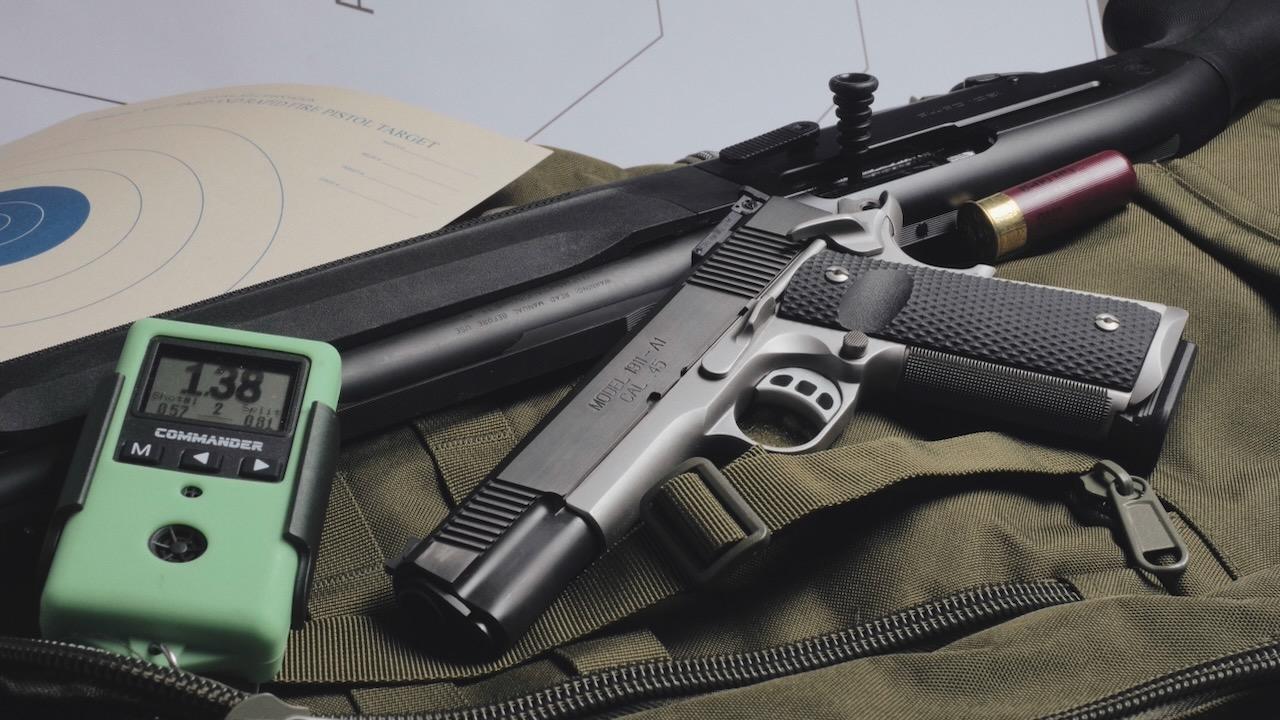
Personally, I use a Commander Shot Timer from AMG Labs. It’s great, but certainly not cheap. Were I shopping around today, there’s a few features I’d be looking for:
- Adjustable sensitivity so it could work with dry fire as well as live fire
- Weather resistance
- Random delay start
- Adjustable beep volume
- Echo filtering
There are other fancy features you might find like bluetooth integration or linking up with Practiscore for matches. Those are fine, and I’m sure clubs get a lot of use out of them, but for most people using it as a personal training tool it is unnecessary.
My suggestions for this are:
- AMG Labs Commander (be prepared to wait a year for the backorder on this)
- AMG Labs Sidekick
- CED7000
- Kestrel KST1000
- Shooter’s Global SG2
- Shooter’s Global SG Timer Go
Of course, classics like the PACT Club Timer III or Competition Electronics ProTimer have a place and will do well for most people. It just lacks a few of the niceties like echo cancellation.
But what can I do for free?
I’m glad you asked. Good shot timers are not cheap, often costing nearly as much as a budget-friendly firearm. There’s definitely space for a phone app that you can set up and use for training, as long as you understand the limits.
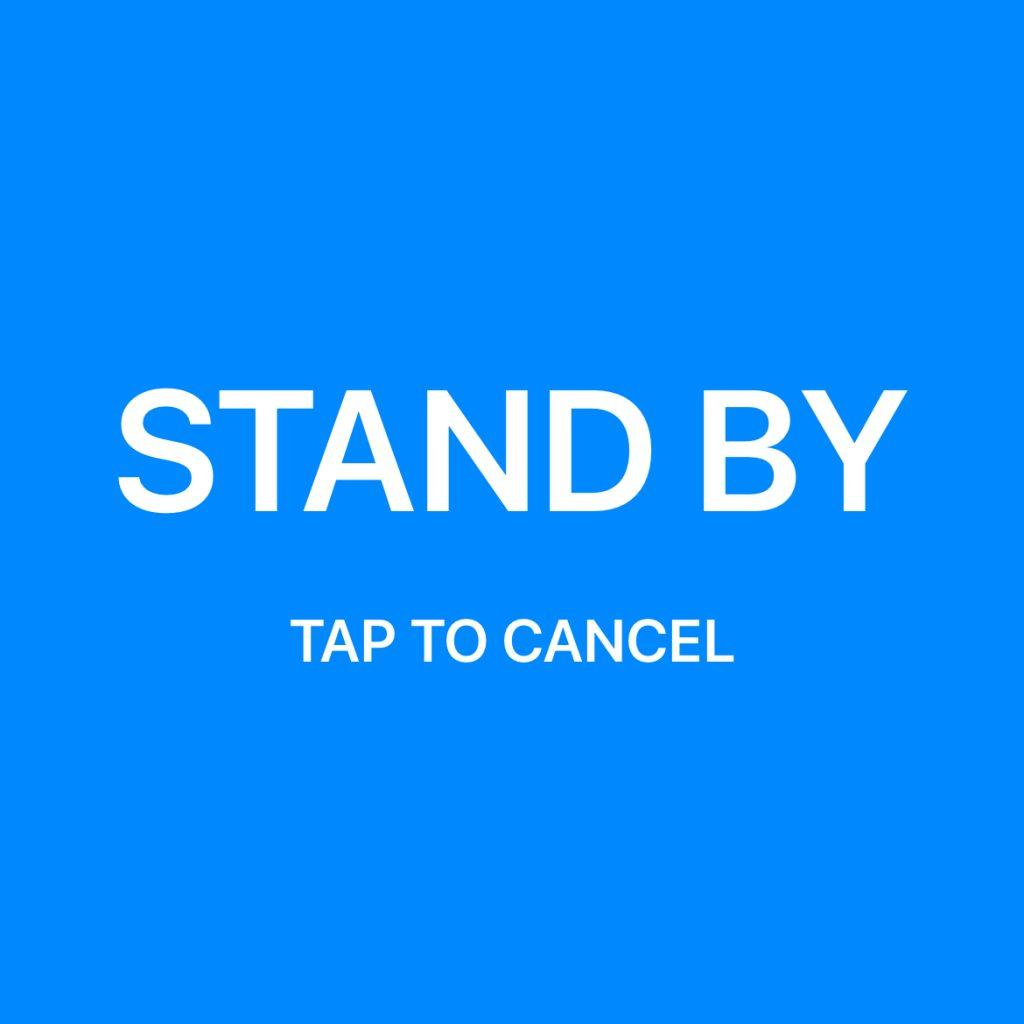
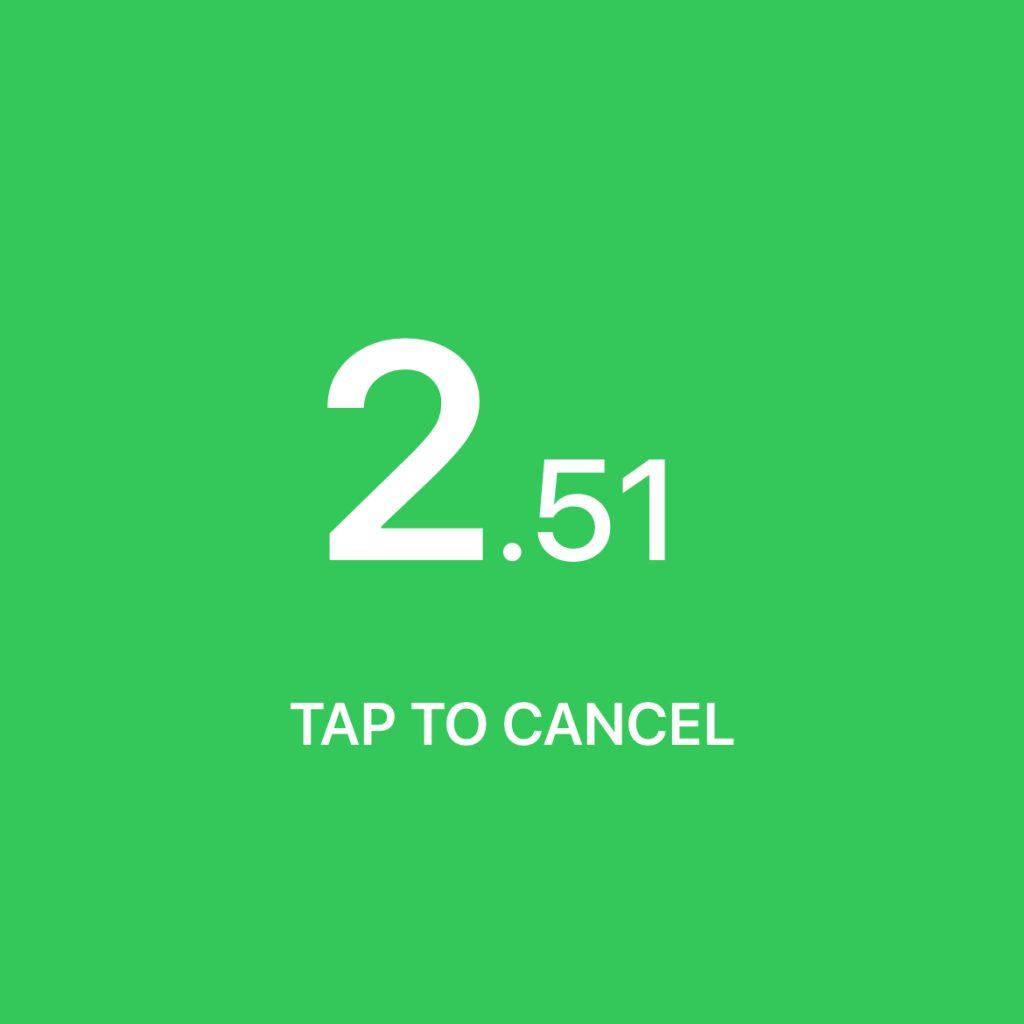
For iOS users, I’ve been using one called ShootOnTime. It’s a pure par timer app, but it’s so convenient to use that I often find myself turning it on rather than my actual shot timer if all I want is a par time setup.



I’m not an Android user, but I’ve heard good things about the Range Day app by T.Rex Arms. It has a dry fire timer. Otherwise, there’s another app called IPSC Shot Timer that looks basic but usable.
Wrapping Up
To close this one out, I realize that shot timers are easy to put in the “nice to have” category rather than “must have.” Honestly, I went years and years without one and thought I was doing just fine. But, if you’re looking to maximize your practice time (especially in dry fire), then there are few tools out there that will help you as much as a shot timer. They are, by far, the most valuable piece of training equipment you can have right after your actual pistol.
The trick is learning to use it effectively for your training. It’s not just a clock. Use it as a performance tool, and you’ll see great progress in a short amount of time.