
At the start of the year, one of my goals is to start learning handloading. Initially, I thought I was going to keep going deeper with the 1911 rabbit hole, and learn reloading with a niche cartridge like 38 Super. It seemed as though everything was figured out, and all I had to do was wait for some funds to save up. And then I had a detour.
In the latter part of 2025, I got the chance to do a review of the Henry SPD HUSH lever action rifle in .357 Magnum for American Rifleman. Finishing up with that rifle, I was left with mixed feelings. The rifle itself was good, and I had a good time with it, but it was the cartridges that gave me pause. There was something about the sheer variety of loads you could run through a .357, from hot loaded full house magnums down to powder puff .38 Special target loads, that I found intriguing.
Going back to the reloading idea, I realized that reloading for .357 Mag or .38 Special made a whole lot more sense. Especially starting out.
Since it’s a revolver cartridge, I wouldn’t have to go chasing brass all over the place to gather it. The prospect of sorting through all the brass on the floor to pick out the 38 Supers, which is only 1/10 of an inch longer than 9mm, seemed like it would be a huge time suck. Then you factor in the sheer amount of load data available for the classic .357 and .38 Special and it’s an obvious starting point for a beginner like me to learn with.
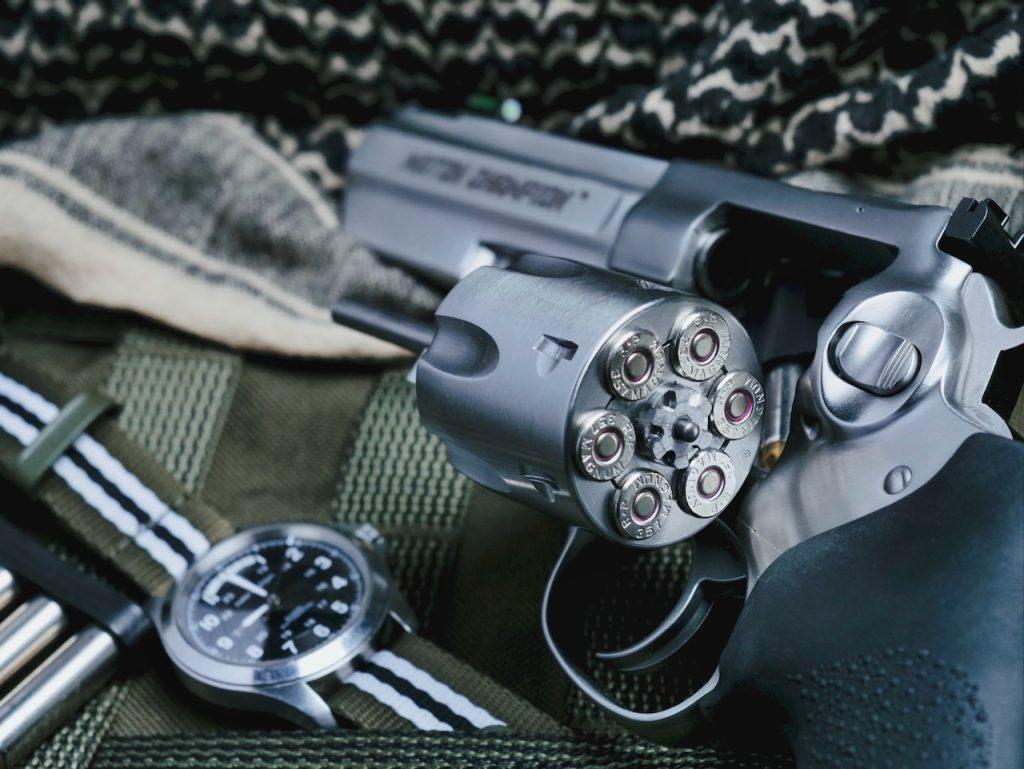
So the next question was what to get? I’ve never been much of a revolver guy. In fact, prior to this point, I’d only ever fired 12 shots through one back in 2019. This seemed like as good an opportunity as any to learn a new manual of arms and gain proficiency with a weapon system style that was totally unfamiliar to me.
Making the Decision
My requirements for a revolver weren’t very specific. I needed something that was reliable, would handle magnums well, and was legal to use in competition settings available in my local area. For the most part, that means IDPA and GPA matches. That meant less than a 4.25″ barrel and 6 rounds of capacity. I also wanted adjustable sights so I could adjust the zero as I experimented with different loads.
That left me with a S&W 627, Colt Python, and Ruger GP100. My friend Justin from Revolver Guy warned me about ongoing quality control issues at S&W, so that ruled them out. I really like the Colt Python, but I was concerned about the way the cylinder release works for competition purposes. That left the GP100, and Ruger happened to make one purpose-built for IDPA: the Match Champion.
When I saw the Talo exclusive model at one of my local stores, with the full lug, tapered cylinder, and more traditional front sight post rather than dovetailed, my fate was sealed. So I paid full retail price of $919.99 (before tax) from my own funds to bring it home.
Bottom Line Up Front
The Ruger GP100 Match Champion III appears to be a fine revolver, particularly for me and my purposes. After several hundred rounds of various ammo loads in both .357 Magnum and .38 Special, including a variety of hand loads, it’s been 100% reliable and appears to be reasonably accurate. For the downsides, I don’t particularly care for the factory sights. The front is too wide for the rear, and the shallow notch of the rear sight does not let me see the full dot of the included fiber optic/tritium front sight. Apparently this is a common complaint amongst revolver models in general.
I did have one manufacturing defect in that the cylinder gap between the front of the cylinder and the rear of the forcing cone was measuring less than 0.002″ from the factory, which is too tight. A few swipes with a stone took care of this in about 10 minutes, and I suspect the issue was burrs and such leftover from machining. The gap now measures a perfect 0.005″
Of the defensive loads I tested, it performed very well with Speer 135gr .357 Magnum GDHP Short Barrel. Federal 158gr LSWCHP 38 Special +P also did well, though ultimately you’d have to do some research on good 38 Special loads for yourself.
The bottom line is that the GP100 Match Champion seems like a perfect all around starting point for a revolver enthusiast. It has enough weight to handle recoil, the trigger is perfectly adequate, if not a little on the heavy side, and has plenty of nice features for the price point.
The Ruger GP100 Match Champion
The GP100 is not a new revolver by any means. It’s been around since 1985 as a replacement for their earlier respected Security Six line of revolvers. I’m unlikely to add anything new to the conversation in that regard. The GP100 is well-understood and has it’s place in the pantheon of revolver nerds. By all accounts, the GP100 is a “tank” of a revolver, designed to eat full house .357 magnums day in and day out without destroying itself in the process.
The Match Champion models have a few design tweaks to them from the factory. Things like a grip with a more vertical angle, slabside barrel, slightly polished and shimmed fire controls, lightly chamfered chambers, and recessed target crowns. The standard Ruger models have half lugs and Novak cut front sights (as well as Novak rear sight on one model). The Talo exclusive uses a rubber Hogue grip of the same angle, a classic plunger-style GP100 front sight for easy replacement, full under lug, and a slightly tapered cylinder to aid with holstering.
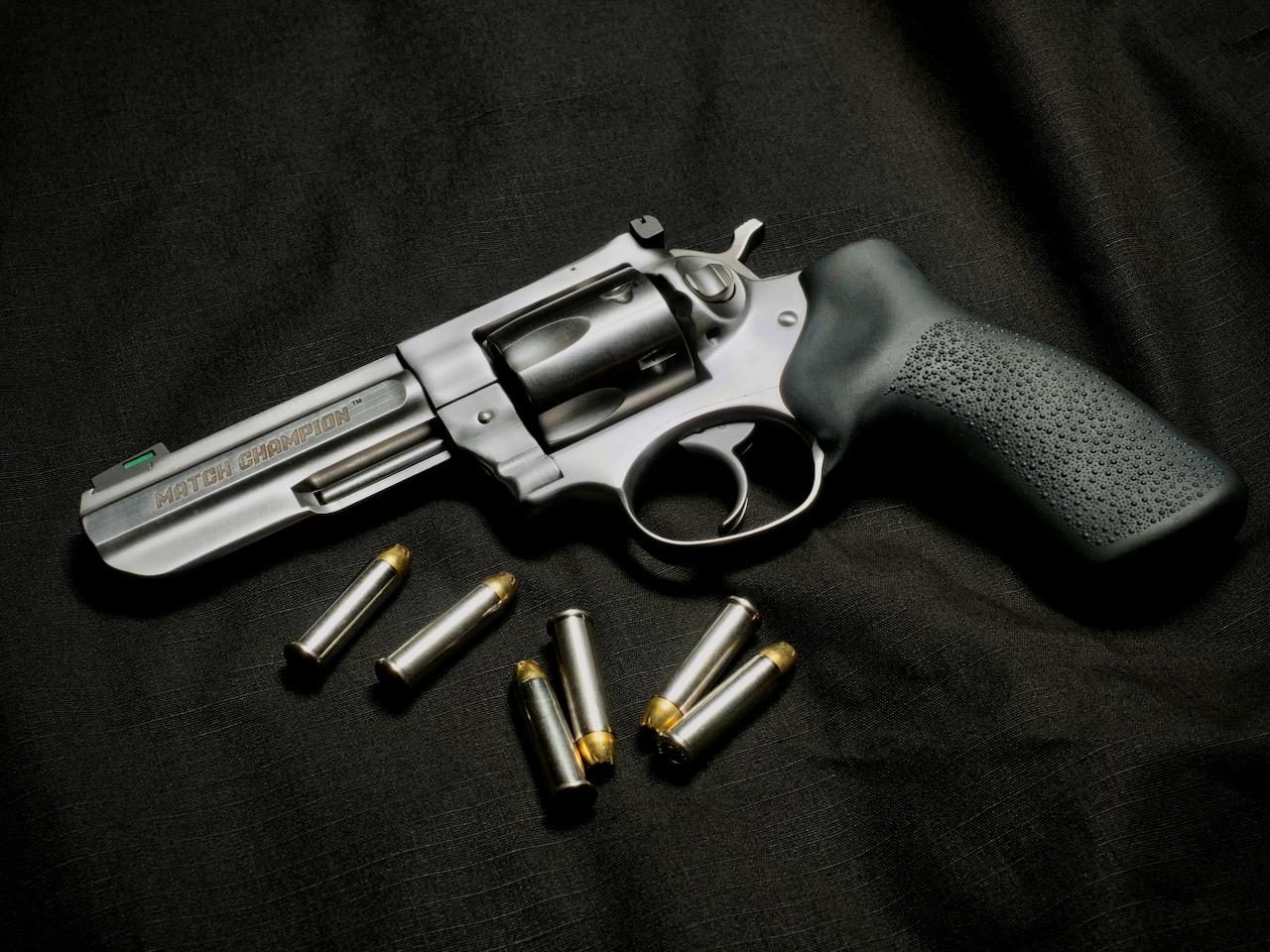
Tech Specs for the GP100 Match Champion III
Here’s the important parts of the spec sheet.
| Specification | Value |
|---|---|
| Manufacturer | Ruger USA |
| Country of origin | United States |
| Length x height x width | 9.5″ x 5.7″ x 1.5″ |
| Weight | 40 oz |
| Trigger Mechanism | Double Action with single action option |
| Sights | Adjustable rear, fixed front. Included front sight is HiViz LiteWave H3 with fiber optic and tritium illumination |
| Material | Matte stainless steel |
| Barrel spec | 4.2″ long, 5 groove with 1/18.75″ twist |
| Capacity | 6 rounds |
| MSRP | $1269.00 |
Inspection Items and Fixes
I was warned ahead of time that QC on all revolvers from the big companies is fairly bad at the moment. They aren’t putting as much effort into it because most of the market has moved on to semi autos. That said, I went through a whole inspection process that I picked up from Brett at Nightwood Guns.
While in the shop, I noticed that it was difficult to see the gap between the front of the cylinder and the rear of the barrel (AKA the forcing cone). I did see it, though, and didn’t have any issues opening and closing the cylinder, so I bought it. A few days after getting it home, I got curious about what the so-called cylinder gap should be.
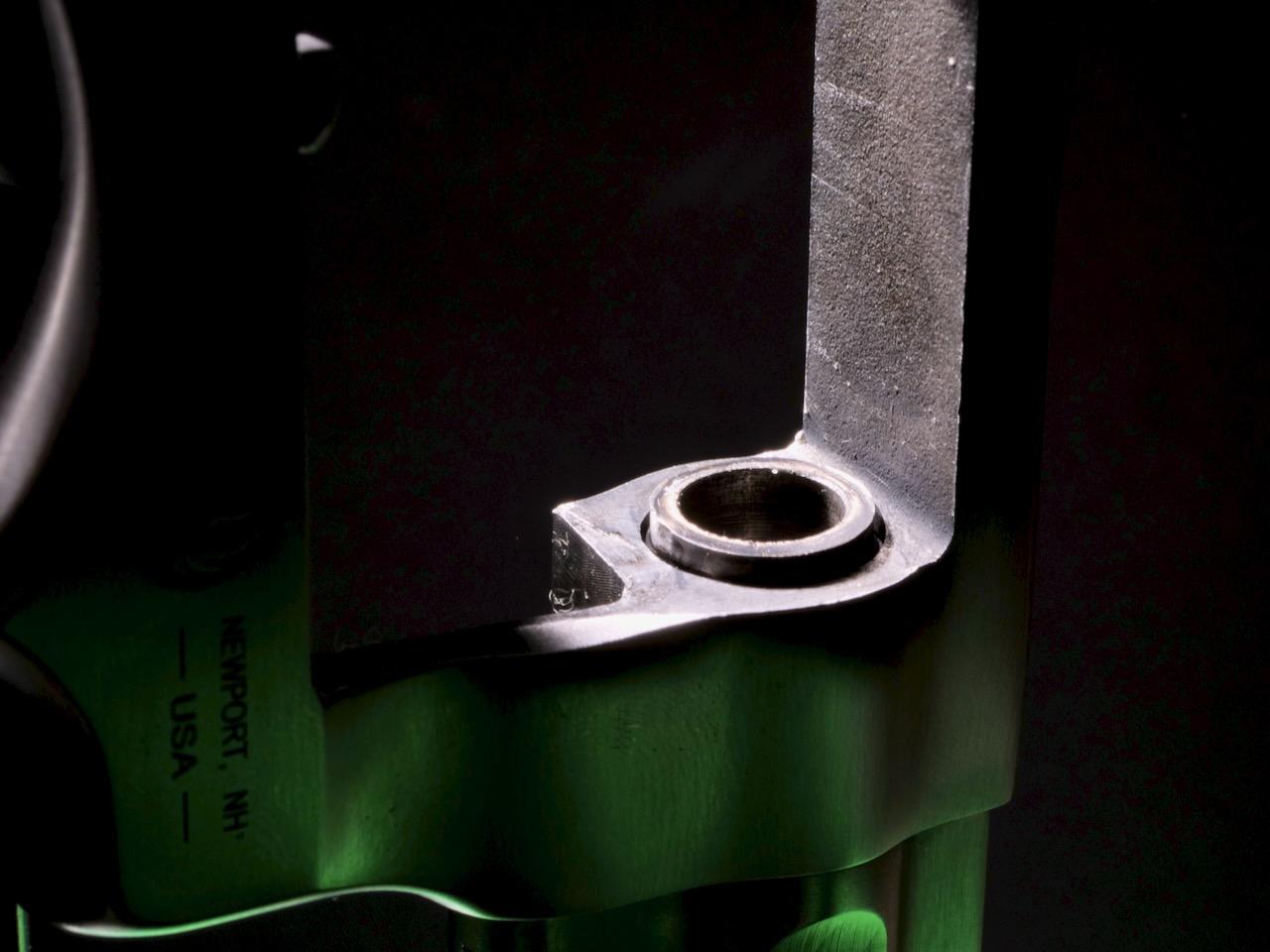
My assumption would have been “as close as possible” for best performance with directing expanding gas down the barrel rather than out the sides of the cylinder. As it turns out, there is such a thing as “too close.”
With too tight of a gap, the cylinder can bind on small particles of burnt powder, carbon, and other trash that sticks to the forcing cone or front of the cylinder. An “ideal” gap is somewhere around 0.003″ and 0.005″, which leaves enough space to avoid binding but is close enough to not lose excess velocity from gas escaping the sides.
Apparently the “standard” used to be 0.006″, but many manufacturers today have allowed things to loosen up to 0.01″ in many cases.
To check, I broke out my feeler gauges. The first was 0.0015, and it slipped in between the cylinder and barrel without issue. The second was 0.002, and it got stuck. So, the gap was too small.
I was about to send it back to Ruger without ever firing it to have them fix it up when I had an idea to use some of the polishing stones I picked up for fitting 1911 components. A few swipes around the forcing cone’s face to clean up some machine grit seemed to solve the problem. The gap now measures 0.005″.
So, I assume that there was some leftover machining burrs and such that got in the way.
Initial Impressions
The basic stuff out of the way, how does it feel? With limited revolver experience, I’m far from an expert. That said, the GP100 feels good. Not quite like it’s molded for my hand like a CZ-75 good, but still good and substantial. The 40oz weight is about on par with my all steel 1911s, and I don’t find it uncomfortable at all. the more vertical style of grip helps it balance and point naturally for me.
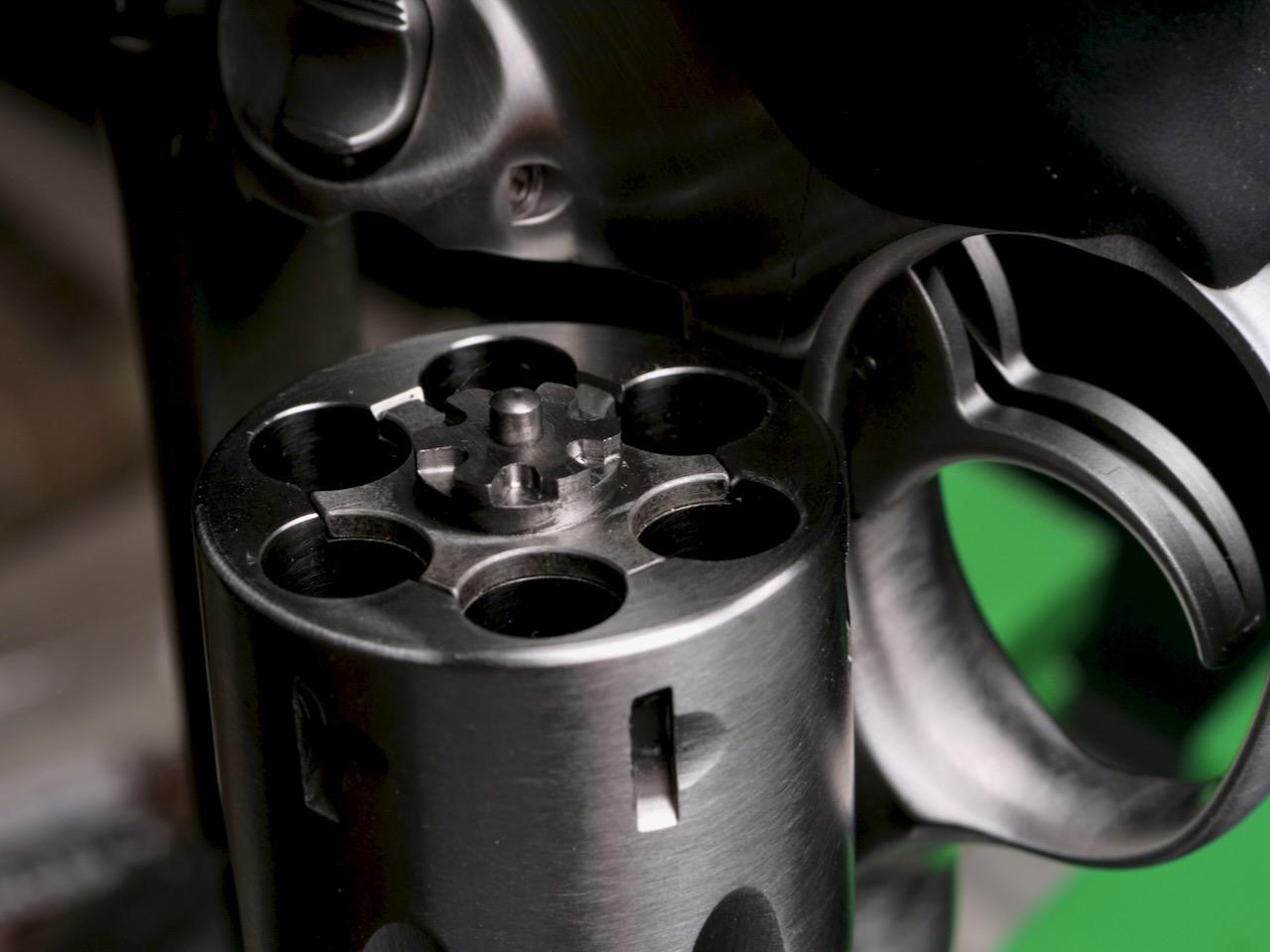
I’m accustomed to double action triggers on my favorite DA/SA pistols, so I’m no stranger to the mechanism (though my DA/SA guns have all had substantial work done to them).
Out of the box, I measured the GP100 trigger with ten pulls of a Wheeler digital trigger gauge in both double action (DA) and single action (SA) modes. The double action measured 11 lb 2 oz, the single action came in at an even 5 lb.
As for trigger feel, that 11 lb 2 oz feels smooth. I didn’t pick up any stacking or anything, just a consistent pull to the rear that’s relatively heavy. There is a distinct “thunk” during the trigger pull that I first thought was a hitch or the sear dropping into a different position, but it’s actually the cylinder lock falling into place. The trigger should continue to smooth out and lighten up over time as the components wear in.
Ideally, I’d like to bring both the double action and single action down by 2-3 lbs. A double action around 8 lbs and single around 3 lbs seems to be my sweet spot.
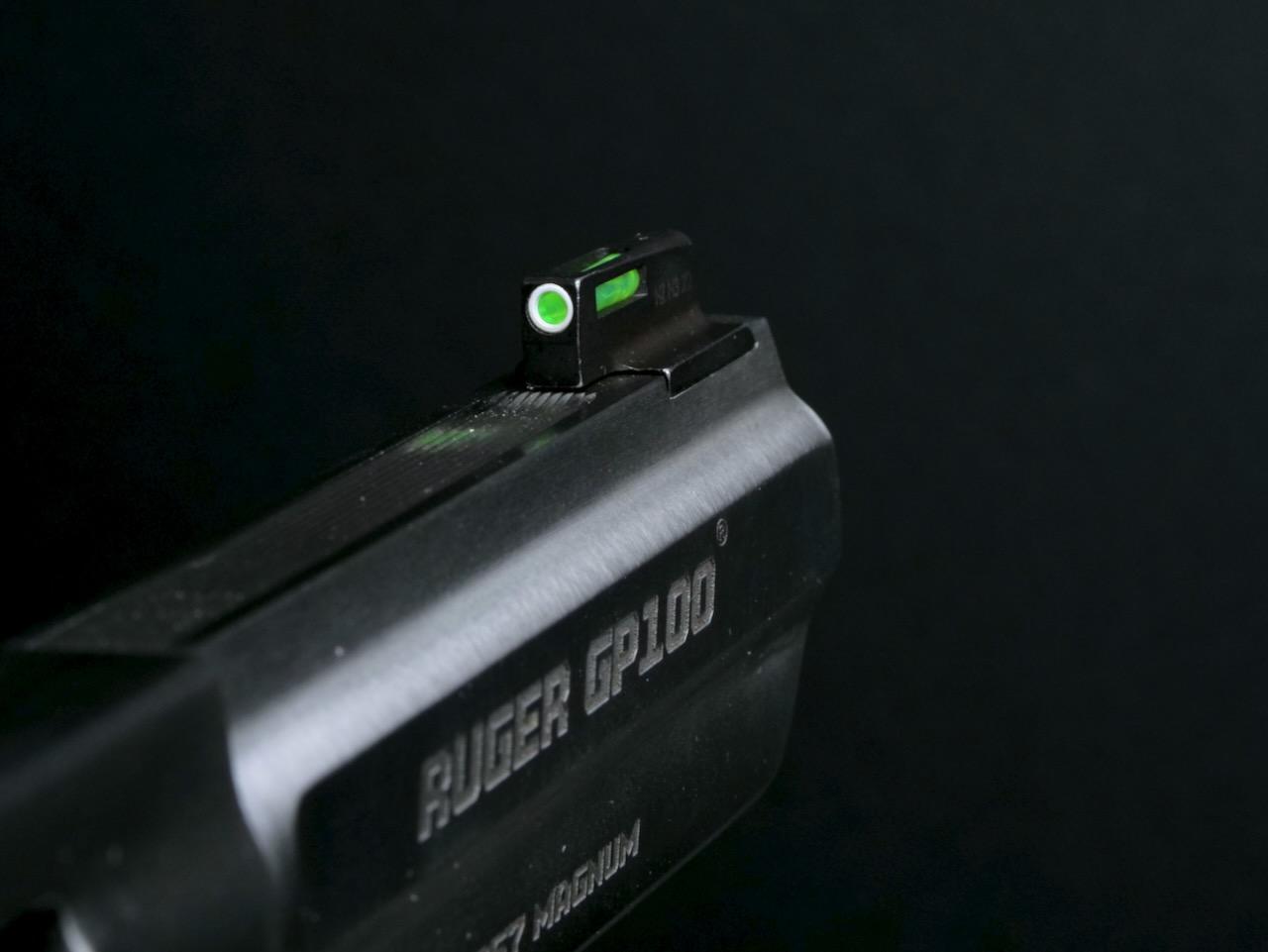
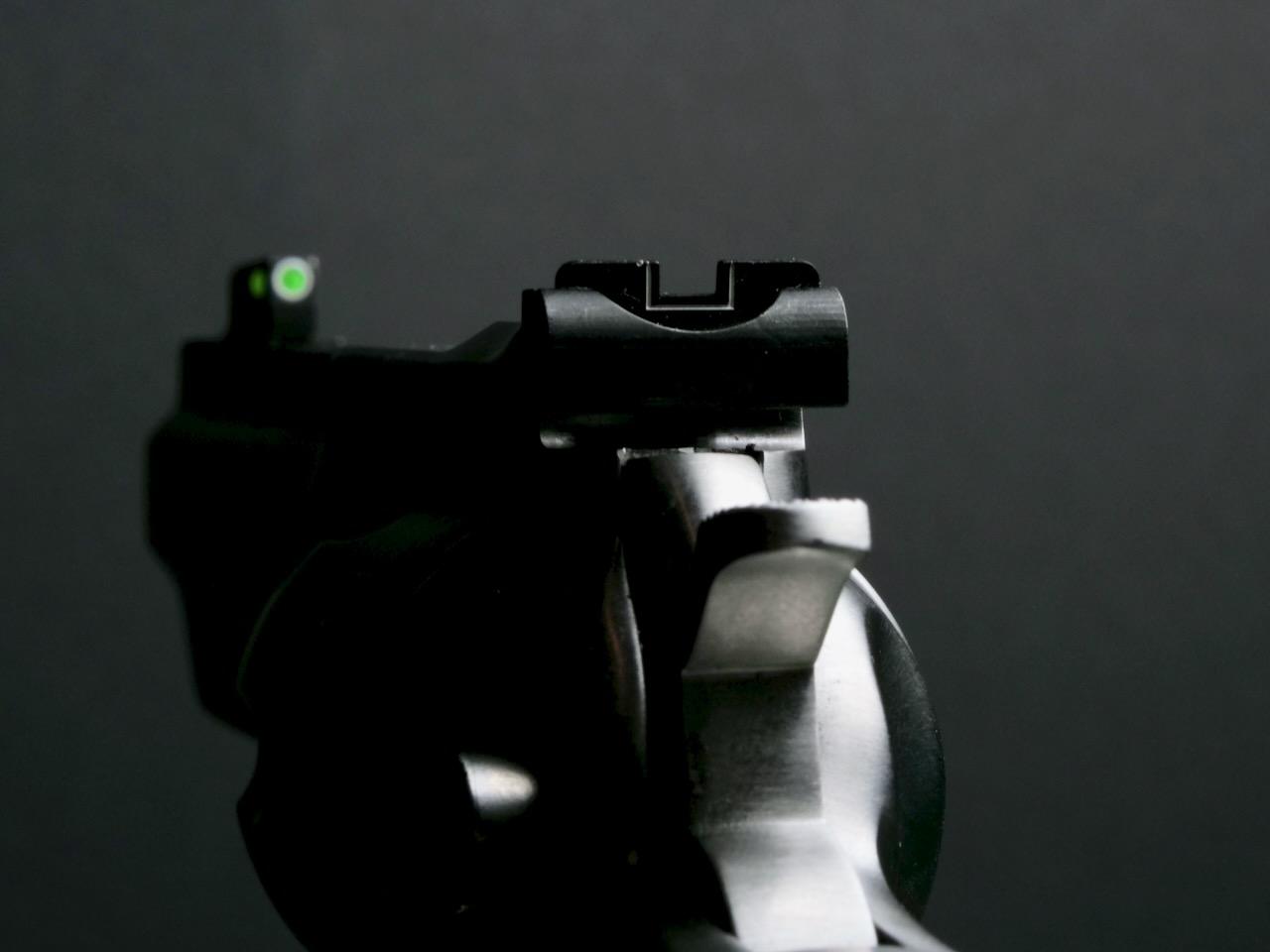
One thing that bothers me a bit is the sights. At first glance, I quite like them. The HIVIZ LiteWave H3 front sight has a big white ring with the green fiber optic panel in the center. Contained in at the front of the housing is the tritium lamp illuminating the fiber optic in the dark. It’s a fine solution for a bit of a “do all” sight. The rear sight has a square notch with a white outline, much like a Glock rear sight. The problem is that when I line the sights up for a proper picture of “equal height equal light”, the bottom edge of the rear sight notch cuts off the bottom portion of the front dot. I know I shouldn’t let this bother me while I focus on the actual square edges of the front sight, but it does. I would prefer that they made the rear sight blade taller to allow for a “correct” sight picture with such a large dot up front.
I measured the front sight at 0.155″ wide, which is way wider than I would like for any kind of precision work. Luckily, swapping the front sight on this style GP100 is very simple. Press a punch into a plunger tube in the front to release the sight, and then it rocks out of it’s spot. I have two different Dawson Precision 0.125″ wide front sights on the way for comparison.
The rear sight notch measured 0.14″ wide.
GP100 Range Performance
Range testing took place over several sessions. The first was mainly a function check to see if it would have any significant malfunctions or cause problems. I shot a variety of loads including some full house 158gr .357 Magnum with stout (but manageable) recoil down to .38 Special loads that were an absolute joy to shoot, easily on par with my 9mm 1911 and even 22LR out of my Mark IV.
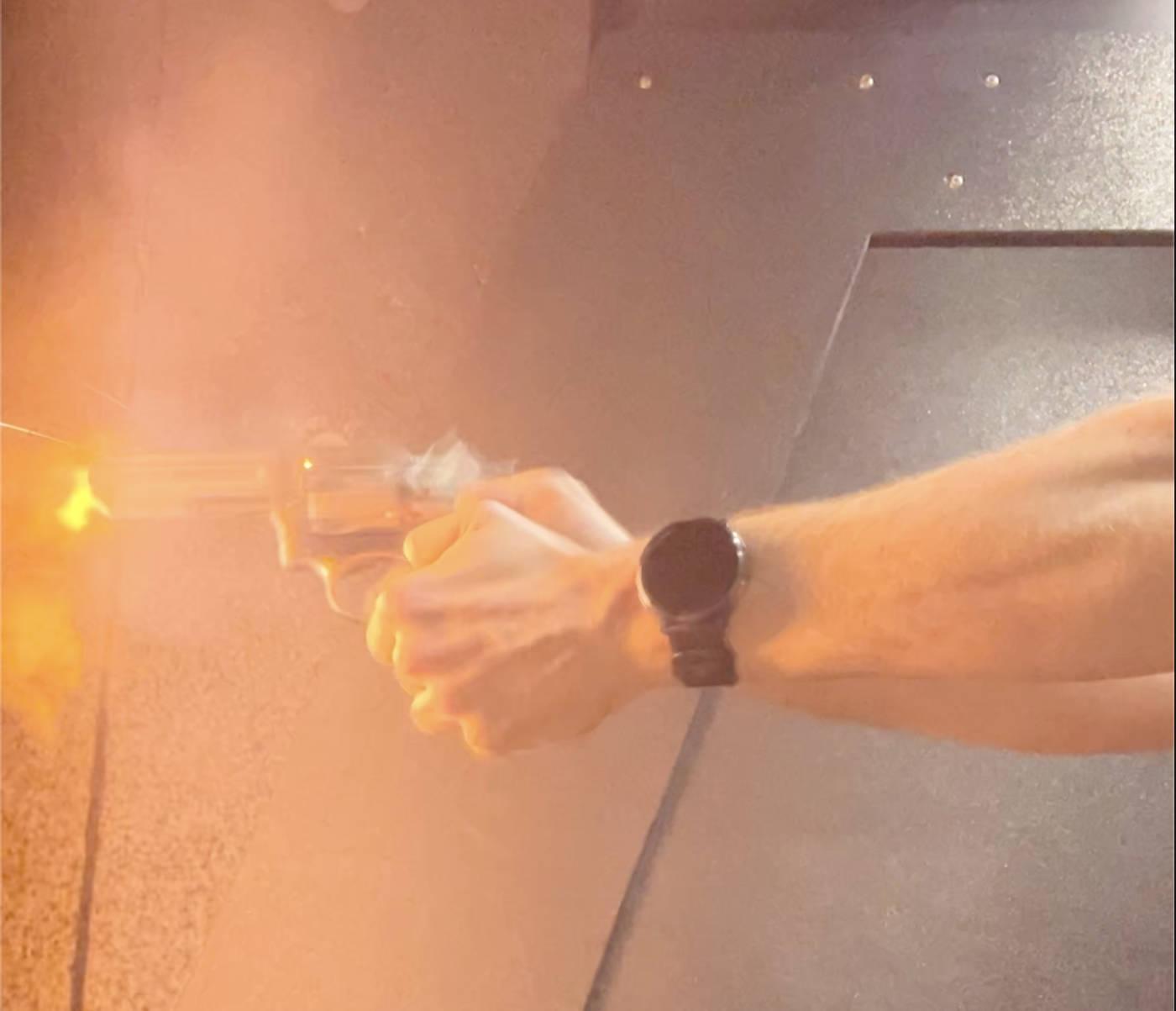
One load in particular, Magtech 125gr .357 Mag, had such a large fireball and concussion in the indoor range that it drew a lot of attention from both the range staff and other shooters around me.
The sights were not adjusted correctly for the loads I was shooting on that session, and I didn’t have a tool for fixing it on the spot. At 7 yards with the PMC Bronze 38 Special, the point of impact was about two inches high and two inches left of point of aim. The initial six shot group was about an inch from standing position. I did not try to group the .357 Mag loads, and to be honest I was peppering all over the A and B zones of the IPSC turtle target due to developing a flinch.
Function was 100% with no issues around feeding, extraction, or getting the cylinder to rotate.
The Hogue grip did an admirable job softening the stout recoil of .357 Mag.
Shooting Characteristics
On that first session, I also brought along a Ruger Mark IV in 22LR as well as my Springfield 9mm 1911 Operator. I’ll ignore the Mark IV since it’s not really in the same ballpark, here. Going back and forth between the GP100 and the 9mm 1911 was eye opening, though.
You see, I’ve spent all of my years shooting auto loaders and am very accustomed to how they operate. I discovered that revolvers have a different feel while shooting. There is no reciprocating mass or anything going on. It feels like a solid block of steel in your hand that recoils against you, but that’s it. The only movement happens when you reset the trigger and begin moving to the next chamber. On the other hand, going from that sensation back to an the 1911 seriously made the mass of the cycling slide apparent to me. Not in a bad way, but different.
I think I actually prefer the rock solid feel of the revolver, which is wild for me to say. The only downside is that six shots goes by pretty quickly.
Accuracy and Velocity Testing
On another session, I brought along a Garmin Xero C1 Pro chronograph, a rest, and three loads of .357 Mag and one .38 Special. Velocity testing consisted of firing 10 shots in front of the chronograph. Accuracy testing took place at 15 yards using single action only, and consists of four five-shot groups.
The front sight being so wide did cause some difficulty with trying to print tiny groups, and that’s on top of my own admitted lack of precision with a pistol- even from a rest. So keep that in mind.
| .357 Load | Velocity Data | Accuracy Data |
|---|---|---|
| Speer 135gr GDHP Short Barrel | Average: 1124.3 FPS Maximum: 1170.1 FPS Minimum: 1064.2 FPS Std. Dev: 30.0 FPS Muzzle energy: 379.1 FT-LB | Smallest: 0.82″ Largest: 1.26″ Average: 1.065″ |
| Winchester Defense 110gr JHP | Average: 1315.4 FPS Maximum: 1368.0 FPS Minimum: 1273.5 FPS Std. Dev: 23.8 FPS Muzzle energy: 422.7 FT-LB | Smallest: 0.84″ Largest: 1.46″ Average: 1.175″ |
| High Desert Cartridge Company 158gr TMJ | Average: 906.5 FPS Maximum: 929.9 FPS Minimum: 854.6 FPS Std. Dev: 21.9 FPS Muzzle energy: 288.4 FT-LB | Smallest: 0.71″ Largest: 1.60″ Average: 1.19″ |
In all, I think the Speer 135gr GDHP Short Barrel is my favorite all-around .357 Mag load for defensive use. I also have a couple of boxes of Speer 158gr GDHP but that is a full house load that I found pretty uncomfortable to shoot much of. Testing with Lucky Gunner labs also showed it to wildly overpenetrate. The High Desert Cartridge Company 158gr TMJ is a training load that I also found very pleasant to shoot and definitely recommend it.
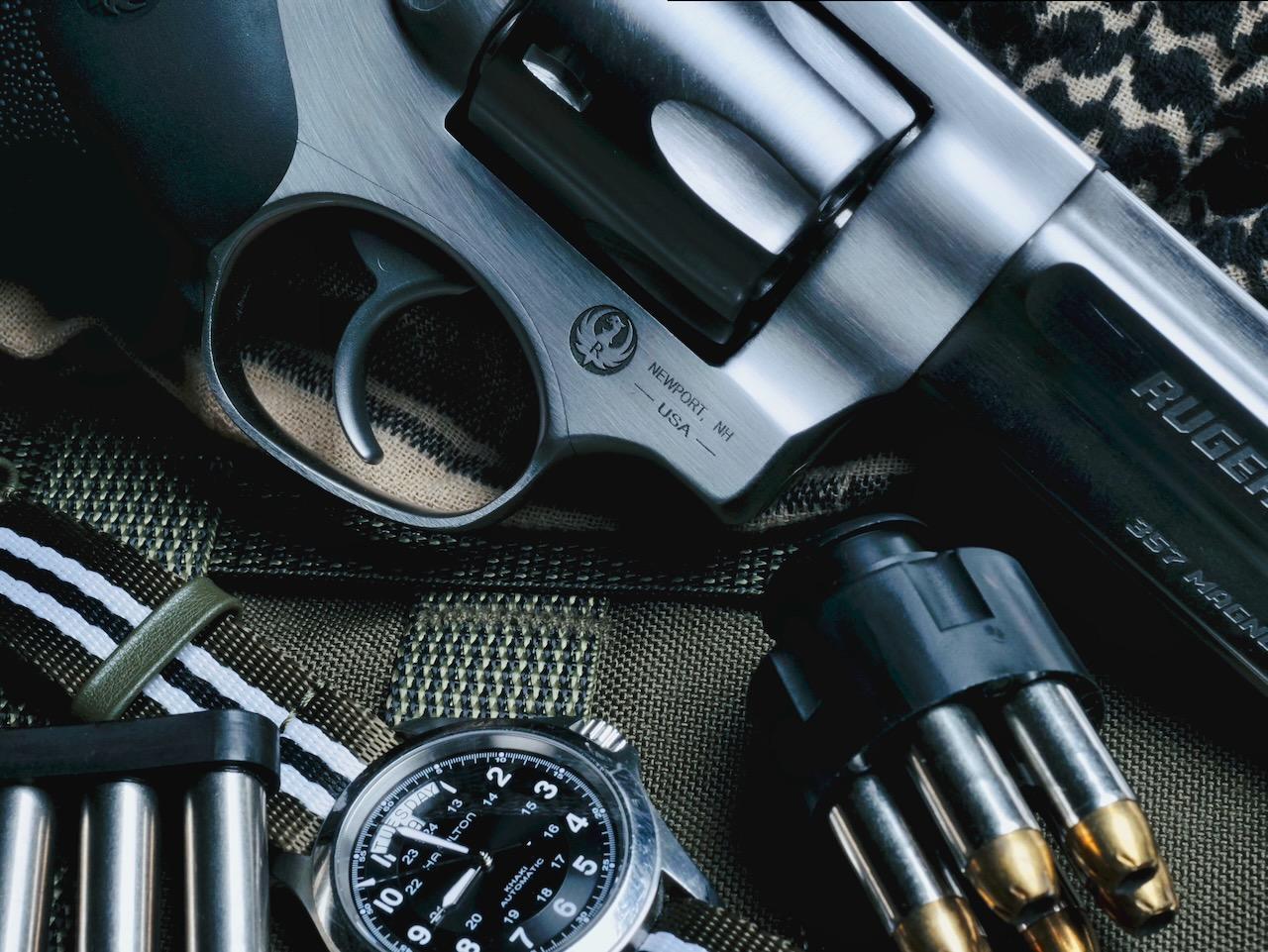
I brought along .38 Special Federal 158gr +P Lead Semi Wad Cutter Hollow Point (LSWCHP) for comparison. This is Federal’s approximation of the classic “Chicago Load” or “FBI Load” that dominated law enforcement .38 Special revolvers for years.
| .38 Special | Velocity Data | Accuracy Data |
|---|---|---|
| Federal 158gr +P LSWCHP | Average: 873.2 FPS Maximum: 884.2 FPS Minimum: 862.5 FPS Std. Dev: 6.6 FPS Muzzle energy: 267.5 FT-LB | Smallest: 0.88″ Largest: 1.19″ Average: 0.965″ |
.38 Special is an absolute joy to shoot in just about every load that I tried. If I was taking a new shooter to the range for the first time, then this combination is up there as a possible “go-to” for making it a fun experience. It doesn’t feel quite like a toy, as with 22LR from the Mark IV, and it’s less complicated than a 9mm 1911. I have several other .38 special loads, such as PMC 132gr, and they were all fun to shoot- I just didn’t have time to do the formal testing on them.
The Federal load was great. I was impressed with it’s velocity consistency as well, as noted by the standard deviation.
Discussion Points
Like driving a manual transmission car, there’s something mechanically satisfying about shooting a double action revolver. The sensation of the mechanical parts working together as you pull the trigger, seeing the cylinder rotate & lock into place, and releasing the hammer tickles my nerd brain at a deep level. Even though I’m a fan of DA/SA pistols, I have to admit that double action in a Beretta or CZ still doesn’t have the same level of “feel” that the revolver has. It’s…brawny and fun.
Something interesting about this experience is just how wide and varied the revolver experience can be depending on what load of ammunition you put into it. I’m so accustomed to auto-loader pistols where everything feels about the same. With revolvers, that’s not true. I’m very intrigued by the prospect of building up range-focused loads to make a fun shooting experience as well as stouter defensive loads.
A Note on Reloading
I mentioned at the beginning that one of the driving factors for getting a .357 Mag revolver was to start learning reloading. I did spend some time shooting my first batch of handloads though it as well. Stay tuned for updates on that front!
The Verdict on the GP100 (For Now)
With all of that said, what do I think of the GP100 Match Champion? So far, I like it a lot. I’ve run through about 300 rounds with it so far, and have no malfunctions thus far. I hope that trend continues as I get into various competitive shooting styles like bullseye, steel challenge (which seems like it would be fun with a revolver), and IDPA/GPA.
As mentioned, I’m unlikely to add anything new to the conversation about it and revolvers in general. I picked up a Galco Combat Master holster to go along with it, and this will be my starting point for competition usage. I may even venture carrying it from time to time, though it’s honestly a bit large for that.
The only issue I had with it was the cylinder gap, which took only a few minutes to clean up. It was more likely just some rough edges getting in the way of the feeler gauges. Still, it would have been better for it to not be an issue at all. The front sight is also an annoyance for me, and I’m swapping that out with something else as soon as feasible.
Would I have been happier with a S&W 686 or a Colt Python? Who knows. If experience has told me anything, so far, it’s that past a certain point most guns are basically the same. As long as they are reliable, it’s much more about personal preferences.
The GP100 seems like a great all around revolver. It’s built tough, simple to operate, seems accurate, and is fun to shoot (especially with lighter loads). I think this year is going to be fun.


